Delegation and the Eisenhower Matrix
The desire to stay on top of everything often leads to a common trap: doing too much, too personally. True leadership isn't about doing it all, it's about doing what matters most and maximize impact. This is where delegation becomes not just a skill, but a strategic necessity.
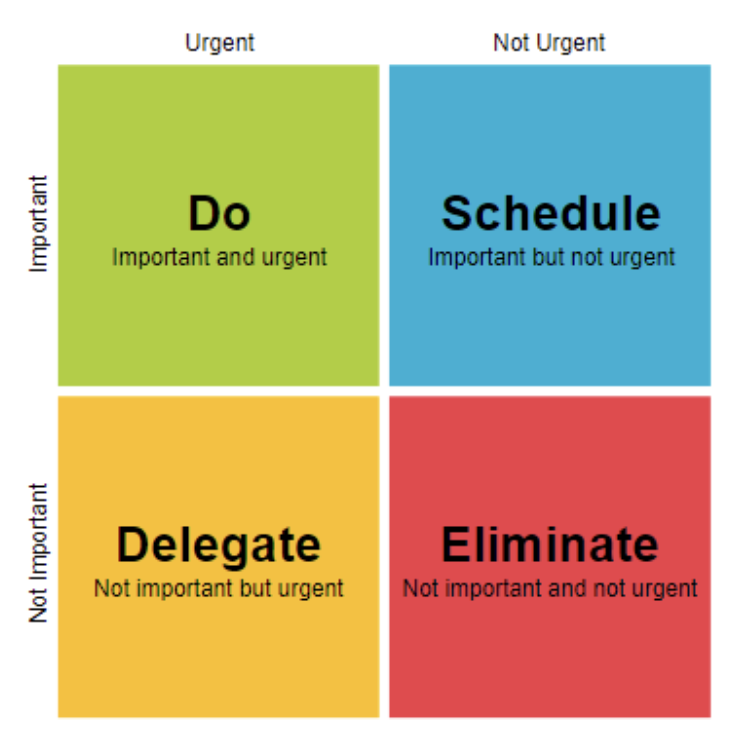
The Eisenhower Matrix offers a simple framework to help leaders decide what to act on, what to plan, what to delegate, and what to eliminate. It categorizes tasks along two axes: urgency and importance. Tasks that are both urgent and important should be addressed directly. Important but not urgent tasks like strategic thinking and team development should be scheduled and protected. But the most overlooked quadrant, especially by leaders, is the one filled with tasks that are urgent but not important. These are the perfect candidates for delegation.
Effective delegation isn't about offloading work, it's about multiplying impact. When leaders hold onto everything they become bottlenecks. Delegating frees up time for higher-level thinking while creating growth opportunities for team members. It builds trust, accountability, and resilience within a team.
Of course, delegation requires more than simply handing something off. It means providing clarity on expectations, outcomes, and authority. It also requires letting go of perfectionism and trusting others to deliver, sometimes differently, but often just as well, or even better.
 The Reverse Centaur's Guide to Life After AI
 When You Don’t Own Your Code
 From Know-it-All to Learn-it-All
 The Legacy Code of Tomorrow