Attention and Intention

The IT industry is currently navigating a fundamental transition between two opposed structural models: the Attention Economy and the Intention Economy. While the former has dominated the last decade of software development, the latter represents a return to pragmatic engineering.
The Attention Economy, a term popularized by economist and Nobel laureate Herbert Simon, is based on the idea that a wealth of information creates a poverty of attention. In this framework, software is designed to capture and monetize human focus as it treats attention as a finite resource to be mined, often resulting in product features that prioritize session length over actual utility. This model views the user as the product.
Conversely, the Intention Economy, a concept championed by the journalist Doc Searls, shifts the power back to the user. Intention is defined as the explicit, goal-oriented purpose a user brings to a platform. Software in this economy functions as a precision instrument and its success is measured by how effectively it facilitates a user’s specific objective.
A system designed for the Attention Economy often suffers from "feature creep" and unnecessary complexity, as every additional minute spent in the UI is viewed as a victory. A system designed for the Intention Economy, however, prioritizes simplicity and speed and it aligns with the Stoic discipline of eliminating the non-essential to focus on what truly matters: the execution of the user's intent.
LLMs and AI agents represent the technical fulfillment of the Intention Economy. Traditional software often forced a compromise: a user’s intent was expressed through a search bar, but the path to fulfillment was intentionally obscured by multiple layers designed to capture attention. LLMs break this cycle by shifting from a keyword-matching logic to a semantic understanding of purpose. Because these models can parse natural language and maintain context, they allow the user to delegate complex, goal-oriented tasks without navigating the distractions of a traditional UI.
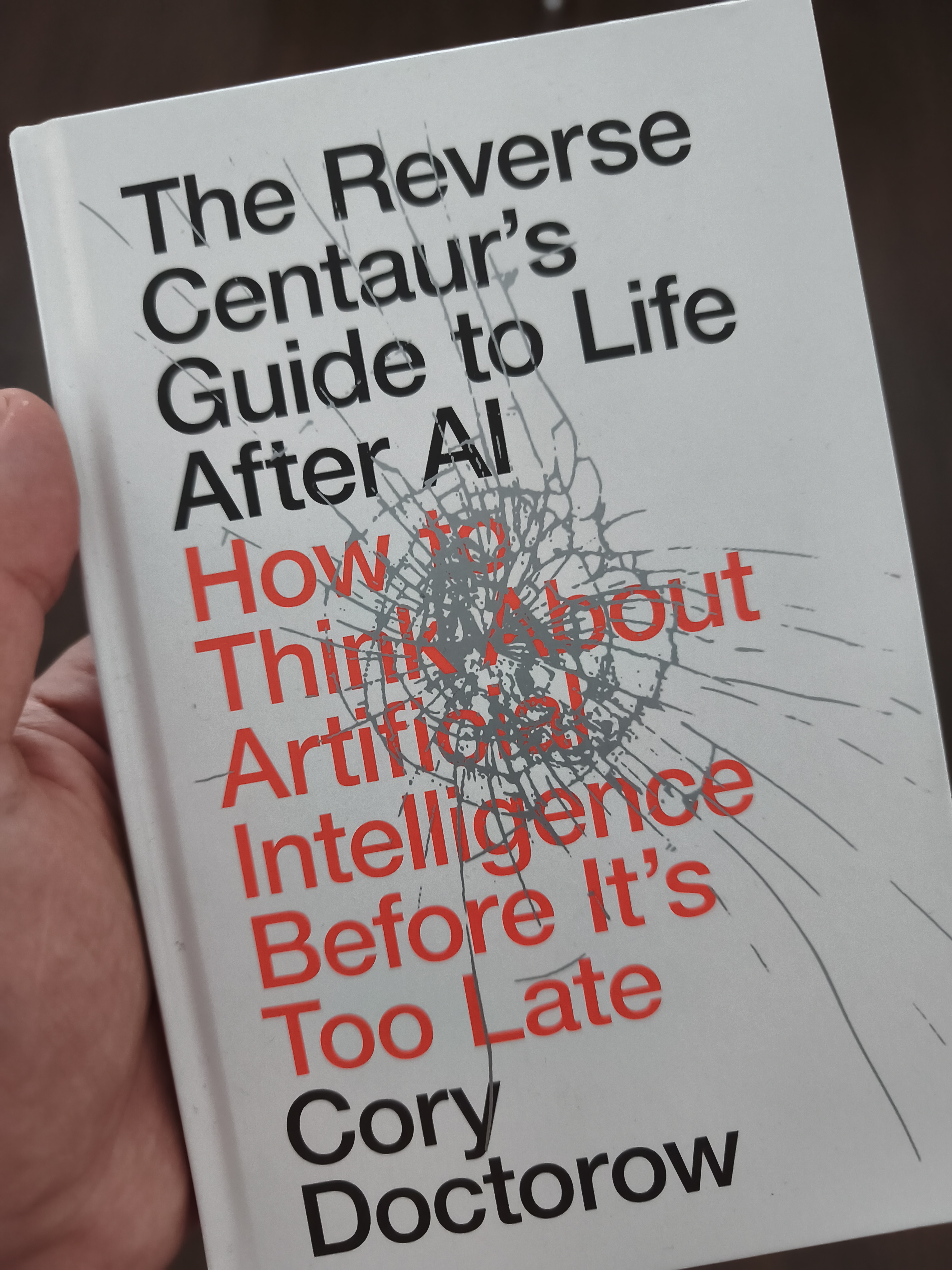 The Reverse Centaur's Guide to Life After AI
 When You Don’t Own Your Code
 From Know-it-All to Learn-it-All
 The Legacy Code of Tomorrow