Technical Debt
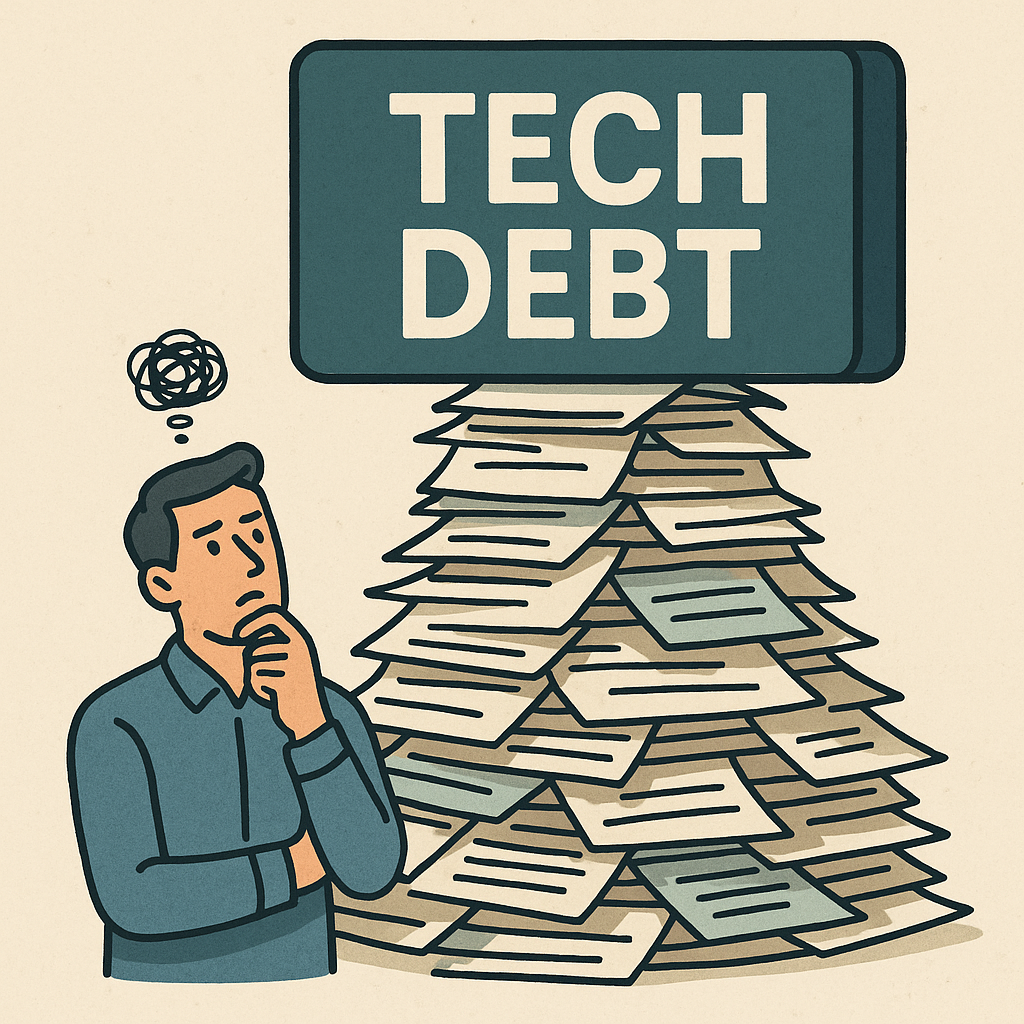
Technical debt is inevitable, but manageable. When left unchecked, it doesn't just affect your codebase, it affects your people, delivery, and business.
Technical debt gradually erodes team productivity and slows down development cycles, making it harder to ship features or iterate quickly. As the codebase grows, the likelihood of bugs and defects increases-undermining product quality and user trust. Delivery timelines stretch, and the time-to-market for new features suffers.
Beyond the technical realm, debt can lead to stakeholder frustration, especially when delays or instability affect customer experience. It raises maintenance costs and diverts resources from innovation, reducing your ability to adopt new technologies or scale effectively. Over time, this misalignment between business goals and technical reality introduces risk-whether through security vulnerabilities, platform limitations, or strategic inflexibility.
Addressing technical debt proactively is essential to maintain agility, reduce operational drag, and keep the focus on building value.
There are different types of Technical Debt:
- Dependencies: Outdated or hard-to-maintain tools/libraries.
- Patterns: Poor design choices that cause recurring issues.
- Redundancies: Duplicated logic or fragmented systems.
- Abstract Elements: Unclear goals or shifting requirements.
- Legacy Templates: Inefficient scaffolding holding teams back.
- Concept Debt: Building unused or unnecessary features.
And different strategies to tackle and prevent it:
- Automate and update dependencies.
- Prioritize refactoring and enforce design reviews.
- Audit and consolidate duplicated components.
- Align abstract ideas with concrete business value.
- Modernize outdated templates and practices.
- Validate feature ideas early-only build what matters.
- Use agile workflows to identify issues early.
- Invest in code quality (reviews, pair programming, static analysis).
- Keep teams trained and current.
- Foster cross-team alignment.
- Design for change-anticipate growth.
- Schedule time to refactor and clean up.
Technical debt isn't just a tech issue. It's a business issue. Managing it well is a competitive advantage.
 The Reverse Centaur's Guide to Life After AI
 When You Don’t Own Your Code
 From Know-it-All to Learn-it-All
 The Legacy Code of Tomorrow